Exploring the right type of life coaching empowers you to begin your growth journey confidently and intentionally.
If you’re beginning to explore coaching, it’s completely normal to feel a mix of curiosity and uncertainty. Coaching is not simply about solving problems. It is about expanding your awareness, strengthening your emotional resilience, and learning how to move through life with clarity and intention. Many people turn to coaching when they feel stuck, overwhelmed, or unsure about what they truly want. Others seek support during transitions, career changes, relationship shifts, burnout, or a growing sense that life is asking for something more.
What makes this journey unique is that coaching adapts to you. It honors your pace, your emotional landscape, and your personal values. Instead of telling you what to do, a skilled coach guides you into deeper clarity so you can hear your own truth more clearly. Across the world, coaching is becoming a trusted support system. Research from the International Coaching Federation shows that people experience significant improvements in goal achievement, work performance, emotional regulation, and overall quality of life. Meanwhile, studies published by the American Psychological Association highlight how structured reflection, meaningful goals, and accountability systems dramatically increase the likelihood of long‑term success.
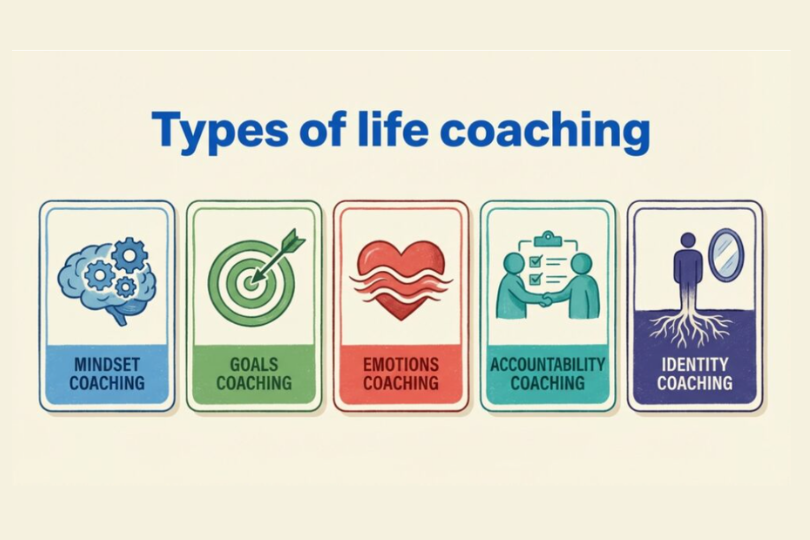
Before we explore the five main coaching styles, I want you to remember something important: you do not have to know exactly what you need before you begin. Coaching often reveals, gently and organically, the deeper layers of your desires, fears, and patterns. Understanding these five styles will help you choose the support that resonates most with where you are today and where you want to go next.
This blog is written by Abhijit Shankaran, a certified life coach and mental fitness enabler. He is also
a content writer and digital marketing expert.
Contents
1. Transformational Coaching
This type of life coaching supports you in exploring your inner world — your beliefs, identity patterns, emotional responses, and long‑established habits of thought. Many people choose transformational coaching during major turning points: feeling disconnected from their purpose, sensing they are meant for something more, or noticing that old coping mechanisms no longer work.
Transformational coaching goes deeper than action steps. It focuses on the internal shifts that make external change possible. You explore what shaped you, which narratives are outdated, and which parts of yourself are asking to be heard. Often, the patterns that block growth are unconscious. This style helps you gently uncover and rewrite them.
Working through identity and belief systems can feel emotional, but it is also incredibly liberating. Clients often describe the experience as ‘coming home to themselves’. You develop a clearer sense of who you are becoming, rather than who you felt pressured to be.
If you are drawn to personal development research, the work of Dr. Carol Dweck is especially relevant, as her work on growth mindset shows how internal beliefs shape what you feel capable of pursuing.
2. Goal Oriented Coaching
Goal oriented coaching is practical, structured, and supportive. It helps you clarify what you want and why you want it. Many people know what they desire — a new job, better habits, improved wellbeing — but feel overwhelmed about where to start. This style breaks big dreams into small, achievable steps that build confidence instead of pressure.
You learn how to distinguish between goals that are genuinely meaningful versus goals based on external expectations. This distinction is powerful — when a goal reflects your values, you are far more likely to stay committed. Coaching helps you set goals that feel energizing, not draining.
Systems and structure also play an important role. The effectiveness of goal oriented coaching is supported by research from the American Psychological Association and the SMART goals framework, both of which emphasize clarity, accountability, and feedback as crucial components of long‑term success.
This type of life coaching becomes especially effective when you are ready to turn intention into steady, aligned action.
3. Emotional Wellness Coaching
Emotional wellness coaching focuses on understanding your emotional patterns, triggers, and responses with compassion. Many people come to coaching not because they lack goals, but because they feel emotionally overwhelmed or disconnected from themselves.
This type of coaching helps you develop emotional literacy — the ability to name, understand, and work with your emotions instead of suppressing them. When your emotional world feels chaotic, it becomes difficult to make decisions, stay motivated, or feel connected to your goals. Emotional wellness coaching gives you steady grounding.
For deeper exploration of emotional intelligence, you may enjoy resources from the Greater Good Science Center which offer practical insights into how emotions influence your wellbeing, relationships, and daily choices.
This type of life coaching is particularly supportive when you want emotional clarity, inner steadiness, and a healthier relationship with your mind and body.
4. Accountability Coaching
Accountability coaching builds consistency, structure, and follow through. It’s not about discipline or pressure — it’s about support. Many people know exactly what they need to do, but life gets in the way. Self doubt, avoidance, fear, or perfectionism can interrupt progress. Accountability coaching helps you stay connected to your goals gently and sustainably.
You and your coach work together to understand what helps you move forward and what gets in the way. This style removes shame and replaces it with curiosity: What made this difficult? What needs to shift? What support would feel helpful? Over time, you develop self trust by consistently showing up for yourself.
If you enjoy habit research, you may find the work of James Clear helpful. His research shows how small systems and supportive environments make long‑term behavior change far more achievable.
This type of life coaching strengthens your capacity to stay committed without burning out or being hard on yourself.
5. Identity Coaching
Identity coaching supports you in rediscovering who you truly are. This style is especially powerful if you are going through a major transition — leaving a job, ending a relationship, starting something new, or redefining your values. Identity shifts can feel confusing, but they are also moments of profound growth.
Through reflective dialogue, grounding exercises, and value exploration, you begin to understand your core self. You reconnect with parts of you that may have been forgotten or silenced. This process helps you make choices from a place of inner clarity rather than fear or obligation.
If you’re curious about self compassion and resilience, explore the work of Dr. Kristin Neff which helps you build a kinder, more grounded relationship with yourself.
This type of life coaching helps you align your outer life with your inner truth, creating changes that feel authentic and lasting.
How These Coaching Styles Integrate Into My Approach
A meaningful coaching journey blends insight, emotional grounding, action, and integration. My coaching framework moves through four phases — Awareness, Alignment, Action, and Integration — and each of the five coaching styles supports one or more of these phases.
Awareness: You begin noticing your patterns, emotions, beliefs, and inner narratives. This phase builds the foundation for every insight and breakthrough that follows.
Alignment: We bring clarity to your direction, values, and goals so your choices reflect your authentic self rather than external pressures.
Action: We translate insight into steady movement with accountability, emotional regulation, and supportive habits.
Integration: Growth becomes part of your identity. You experience changes not as temporary wins but as lasting shifts that continue to expand.
Which Coaching Style Resonates With You
Choosing a coaching style is not about selecting the ‘perfect’ method. It’s about choosing support that feels aligned with where you are right now. You may be drawn to one approach or feel that a blend of styles would support you best — both are completely valid. A skilled coach adapts the journey to your needs, not the other way around.
Each type of life coaching offers a unique way to understand yourself and move forward with clarity and confidence.
Exploring the right type of life coaching can help you begin your coaching journey feeling clear, supported, and empowered.
Contact me
Get in touch with me for a personalized life coaching journey. Sessions are held online/offline.
To get started, reach out to me. My contact details are below
Abhijit Shankaran
Bengaluru, Serves globally
(+91) 8939920025
abhijitshankaran@gmail.com