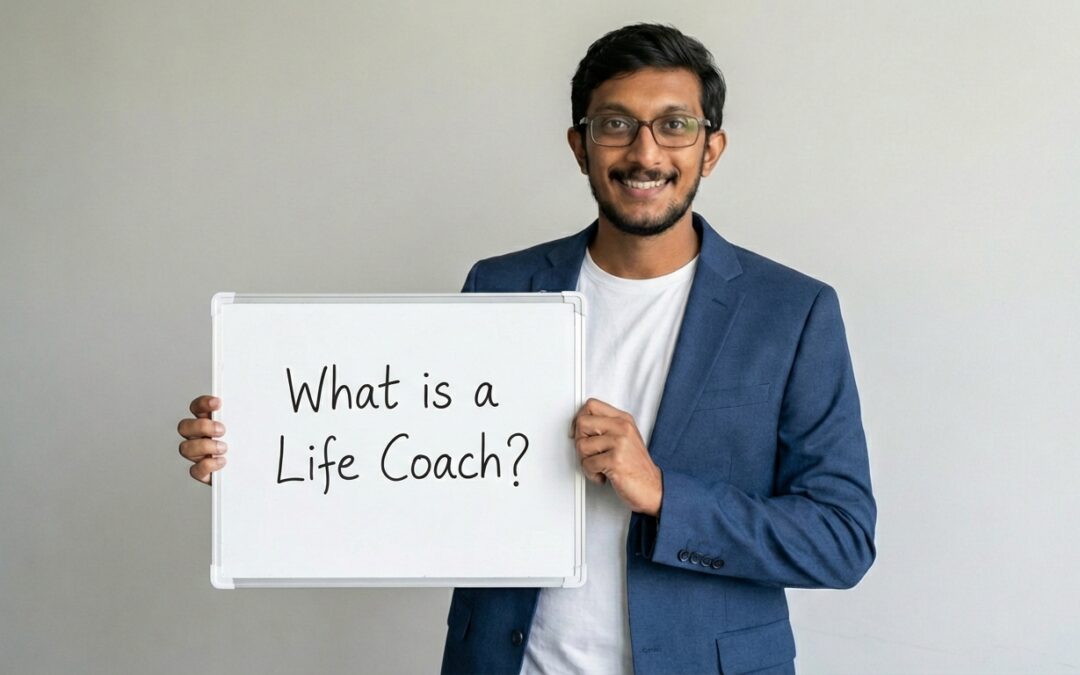
A common starting question people ask is what is a life coach?, especially when they’re trying to decide whether coaching or therapy is the right path for their growth.
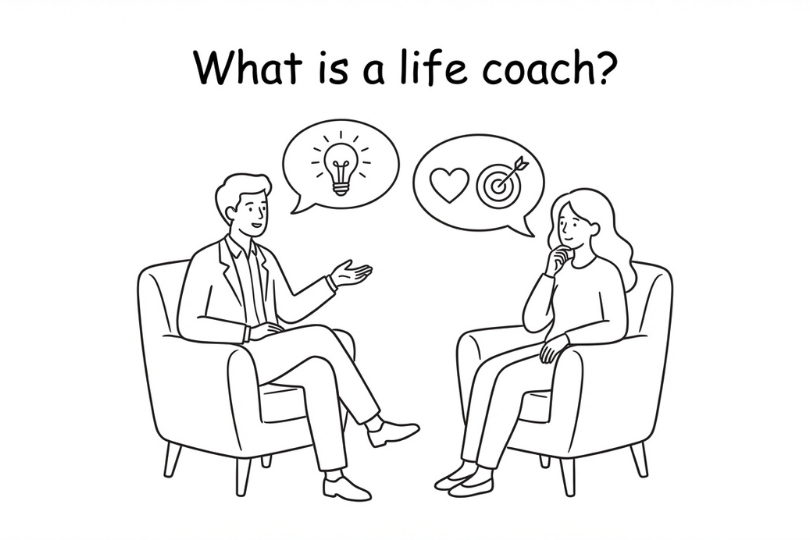
A life coach is a trained professional who helps you set clear goals, build helpful habits, and take steady action toward the life you want. Coaching is future‑focused and non‑clinical: a coach does not diagnose or treat mental health conditions and will refer you to a therapist if needed. The International Coaching Federation (ICF) defines coaching as a thought‑provoking, creative partnership that helps clients maximise their potential. Lets explore the question ‘What is a life coach?’
Contents
- 1 What is a Life Coach?
- 2 What Does a Life Coach Actually Do?
- 3 Life Coach vs. Therapist: What’s the Difference?
- 4 How Does Life Coaching Work? (Step by Step)
- 5 Is There Evidence That Coaching Works?
- 6 What Areas Can a Life Coach Help With?
- 7 What Happens in a Typical Coaching Session?
- 8 How to Choose the Best Life Coach for You
- 9 How Many Sessions Do I Need?
- 10 Coaching and Mental Health: Staying Safe
- 11 Key Benefits of Life Coaching (At a Glance)
- 12 Conclusion
- 13 Contact me
- 14 FAQs
What is a Life Coach?
A life coach partners with you to clarify what you want, explore what’s in the way, and design small steps you can actually keep. Rather than giving advice or telling you what to do, a skilled coach creates a structured, supportive space where you think more clearly, act more deliberately, and learn from real‑world practice. The work is practical, forward‑focused, and grounded in accountability, so change feels doable, not overwhelming.
At its core, life coaching is about helping people translate intention into action. Many people know what they want in a general sense more confidence, a better career path, healthier habits, but struggle with how to move forward consistently. A life coach helps bridge that gap by asking thoughtful questions, reflecting patterns to you, and co‑creating plans that fit your energy, values, and real‑life constraints.
A life coach also helps you understand the why behind your goals. When goals are connected to personal values and identity, they tend to be more resilient. Instead of chasing external milestones alone, coaching emphasizes meaning, self‑trust, and sustainable progress. You may refer to a top 10 list of coaches to see which coach suits you best.
If you’ve ever wondered what is a life coach? in practical, everyday terms, these are the areas where coaching tends to create the biggest impact.
Common areas where people seek life coaching include:
- Career development and transitions
- Leadership presence and decision‑making
- Confidence, self‑belief, and mindset blocks
- Habits, productivity, and focus
- Communication, boundaries, and relationships
- Work–life balance and lifestyle design
Importantly, life coaching is not therapy. Coaches do not diagnose or treat mental health conditions, and they do not process unresolved trauma. Ethical coaches work within clear boundaries and refer clients to licensed mental health professionals when deeper clinical support is needed.
Understanding what is a life coach? also means recognising that the role is more about partnership and progress than advice‑giving.
This blog is written by Abhijit Shankaran, a certified life coach and mental fitness enabler. He is also
a content writer and digital marketing expert.
What Does a Life Coach Actually Do?
While coaching styles vary, most life coaches focus on a few core functions that make change more likely to stick.
1. Find Clarity
Coaches help you name what truly matters and translate it into clear, specific goals. This often includes:
- Clarifying values and priorities
- Defining outcomes in practical terms
- Identifying what “success” would realistically look like
- Breaking vague desires into actionable objectives
Clarity reduces decision fatigue. When you know what you’re aiming forand whyit becomes easier to say yes to aligned actions and no to distractions.
When people first explore what is a life coach?, they often assume it’s about motivation, but the deeper work happens when goals connect to values and identity.
A big part of answering what is a life coach? comes from understanding how coaches help people break vague desires into realistic, meaningful actions.
2. Make a Simple, Sustainable Plan
Instead of large, abstract plans, coaches emphasize small steps that fit your time, energy, and context. Research on goal‑striving shows that outcomes improve when goals are paired with concrete actions, routines, and regular reviewnot just intention.
A coaching plan typically answers:
- What is the next doable step?
- When and where will it happen?
- What might get in the way?
- How will progress be tracked?
3. Build Habits and Confidence
Confidence is often a by‑product of action, not a prerequisite. Through consistent practice and reflection, coaching helps clients build evidence that they can follow through. Over time, this strengthens self‑trust and reduces reliance on motivation alone.
Workplace and performance studies suggest coaching can support measurable improvements in goal attainment, performance, and self‑efficacy when it focuses on practice and feedback.
4. Provide Accountability and Momentum
Regular check‑ins create momentum. Knowing someone will ask about progress encourages follow‑through, while the coaching conversation itself provides a space to adjust the plan without judgment. Accountability in coaching is supportive, not punitiveit’s about learning what works and refining the approach.
Life Coach vs. Therapist: What’s the Difference?
This comparison is one of the clearest ways to answer what is a life coach?, because understanding boundaries ensures people receive the right type of support.
This distinction is essential for safety and effectiveness.
Therapy is licensed healthcare. Therapists are trained to diagnose and treat mental health conditions and often explore the past to resolve trauma, emotional distress, or clinical symptoms.
Coaching is a non‑clinical, growth‑oriented partnership. Coaches work with people who are generally functioning and want to improve specific areas of their lives. The focus is on the present and future: goals, skills, decisions, and habits.
A simple way to remember it:
Therapy looks back to heal. Coaching looks forward to grow.
Ethical coaches clearly explain this boundary, screen for fit, and make referrals when coaching is not appropriate on its own.
How Does Life Coaching Work? (Step by Step)
what is a life coach? are also curious about the actual process, which typically unfolds through discovery, agreements, exploration, and practice.
While each coach has their own style, many follow a similar process.
1. Discovery Call
A short (usually 20–30 minute) conversation to explore:
- Your goals and challenges
- The coach’s approach and philosophy
- Logistics like schedule, fees, and cadence
- Whether the partnership feels like a good fit
This call is as much for you as it is for the coach.
2. Coaching Agreement
If you decide to proceed, you’ll agree on:
- Coaching goals and focus areas
- Session frequency and length
- Confidentiality and ethics
- What coaching isand is not
Clear agreements are a core professional competency in coaching.
3. Early Sessions: Foundation and Clarity
The first few sessions often focus on:
- Values and priorities
- Desired outcomes
- Current habits and patterns
- Strengths and resources
Many coaches draw from positive psychological coaching models that emphasize strengths, agency, and short‑to‑medium‑term progress.
4. Tools and Techniques
Common coaching tools include:
- Powerful, open‑ended questions
- Reflection and reframing
- Goal‑setting and action planning
- Habit tracking and reviews
- Accountability structures
A key shift is from goal setting to goal striving: practicing behaviors, tracking results, and learning from experience.
5. Cadence and Length
Coaching may be:
- Weekly or bi‑weekly
- A fixed package (e.g., 4–12 sessions)
- Open‑ended with periodic reviews
Many sessions follow a simple arc: check‑in → focus → exploration → plan → next steps.
6. Ethics and Referral
If a client shows signs of significant distress or a mental health condition, ethical coaches pause or stop coaching and refer to appropriate clinical support.
Is There Evidence That Coaching Works?
The research base for coaching is still developing, but findings are generally positive, particularly in structured settings:
- Meta‑analyses of workplace coaching report positive effects on performance, goal attainment, and related outcomes.
- Reviews of life coaching in health and wellbeing contexts show promising results for self‑efficacy and empowerment, while noting the need for more rigorous trials.
- Positive psychological coaching models highlight improvements in wellbeing, engagement, and strengths use.
- Behavior‑change research consistently shows that implementation, feedback, and practicenot intention alonedrive lasting change.
Overall, evidence suggests coaching is most effective when it emphasizes clarity, action, and ongoing practice.
What Areas Can a Life Coach Help With?
Life coaching is flexible and can support many growth‑oriented goals, including:
- Confidence and self‑belief: rebuilding trust in yourself through action
- Career and work: clarity, leadership presence, transitions, and decision‑making
- Habits and productivity: starting, maintaining, or stopping behaviors
- Relationships and communication: boundaries, assertiveness, and alignment
- Wellbeing and balance: non‑clinical lifestyle changes and routines
Coaching is especially useful when you feel “stuck” but not clinically unwell.
What Happens in a Typical Coaching Session?
Although each coach is different, many sessions include:
- Check‑in and recent wins
- Clarifying today’s focus
- Exploring insights, blocks, or decisions
- Identifying options and next steps
- Agreeing on small, doable actions
- Setting accountability and closing
Sessions are collaborative and client‑led, with the coach guiding the process rather than directing outcomes.
Coaching Ethics, Training, and Credentials
Life coaching is not government‑licensed healthcare, so training standards vary. Many clients look for coaches who:
- Follow a recognized code of ethics
- Are trained in established coaching competencies
- Maintain clear boundaries with therapy and consulting
- Commit to ongoing supervision or professional development
Credentials alone don’t guarantee quality, but ethical standards and transparency are important indicators.
How to Choose the Best Life Coach for You
Choosing a coach is a personal decision. Consider the following:
- Fit and safety: Do you feel heard, respected, and unjudged?
- Scope clarity: Does the coach clearly explain coaching vs. therapy?
- Professional standards: Are ethics and boundaries explicit?
- Clear process: Do they explain how sessions run and how progress is tracked?
- Evidence‑aware approach: Do they emphasize practice and habit‑building, not just motivation?
A discovery call is the best way to assess these factors.
How Many Sessions Do I Need?
The number of sessions depends on your goals:
- 4–6 sessions: Often enough for clarity and momentum on a focused goal
- 8–12 sessions: Common for habit change, confidence building, or transitions
- Longer engagements: Useful for leadership development or ongoing growth
Many coaches offer packages with clear milestones and reviews.
Coaching and Mental Health: Staying Safe
If you’re experiencing severe distress, suicidal thoughts, or symptoms of a mental health condition, start with a licensed therapist or psychiatrist.
Coaching can sometimes complement therapy when roles are clearly defined, but it should never replace clinical care. Ethical coaches prioritize your wellbeing above all else.
Common Myths About Life Coaching
- “Coaches tell you what to do.” Good coaches don’t give directives; they help you think and choose.
- “Coaching is just motivation.” Effective coaching focuses on action, practice, and learning.
- “You need to be broken to need a coach.” Coaching is for growth, not fixing.
Key Benefits of Life Coaching (At a Glance)
- Clarity: Define what you want and why it matters
- Action: Turn goals into small, steady steps
- Momentum: Build habits with check‑ins and accountability
- Confidence: Learn from progress without harsh self‑criticism
- Results: Research shows positive effects in structured settings
Conclusion
Life coaching is a forward‑focused, practical partnership designed to help people gain clarity, take meaningful action, and sustain change. Rather than offering advice or treating mental health conditions, a life coach supports you in understanding what truly matters to you, translating that insight into achievable goals, and building the habits and confidence needed to follow through.
When grounded in clear boundaries, ethical standards, and evidence‑aware practices, coaching emphasizes action, reflection, and continuous learning. Research increasingly suggests positive outcomesparticularly in areas like performance, self‑efficacy, and well being when coaching prioritizes practice over intention alone.
Ultimately, the value of life coaching lies in its ability to help you move forward with purpose. With the right coachone who aligns with your values, explains their process clearly, and prioritizes your wellbeingcoaching can become a powerful catalyst for sustainable personal and professional growth.
So when someone asks what is a life coach?, the simplest answer is that a coach is a partner in clarity, action, and sustained personal growth. Not a clinician, not a consultant, but a catalyst for forward movement.
Contact me
Get in touch with me for a personalized life coaching journey. Sessions are held online/offline.
To get started, reach out to me. My contact details are below
Abhijit Shankaran
Bengaluru, Serves globally
(+91) 8939920025
abhijitshankaran@gmail.com
FAQs
What is a life coach in simple words?
A life coach helps you decide what you want, plan small next steps, and follow through until it sticks. Coaching is about future goals, not mental health treatment.
Do life coaches diagnose mental health issues?
No. Coaches do not diagnose or treat mental health conditions. Ethical coaches refer to licensed care if clinical support is needed.
How is coaching different from therapy?
Therapy is licensed healthcare that treats mental health concerns and often explores the past. Coaching is a non‑clinical, goal‑focused partnership about action and growth.
What happens in the first session?
You and the coach set goals, agree on how you’ll work, and pick one small action to try before the next session. Clear agreements and scope are standard practice.
How long does it take to see results?
Some see progress in a few sessions, especially when they practice between sessions. Even small progress is a big win.
Is there research behind coaching?
Yes. Evidence shows positive effects in workplaces and promising results in health‑related life coaching, with ongoing calls for more rigorous studies.
Trackbacks/Pingbacks